
Cracked, stained or damp-trapping render can hide perfectly good brickwork. We take it off carefully, clean the brick and finish the wall with repairs and repointing, so you are left with a sound, natural brick facade rather than a patched one.
07429 912 873
Get in touch with Brick Cleaning South London to discuss your project and request a free quote.
Cracks and hollow patches
Tap the wall: a hollow sound means the render has come away from the brick.
Damp inside
Cement render can trap moisture in older, solid brick walls.
Stains and algae
Streaks, green growth and flaking paint keep coming back.
You want the original look back
Many period houses were rendered later, hiding the brickwork they were built with.
We check the render, the brick and the access, then send a clear quote covering removal and any follow-on work.
Windows, doors, paving and planting are covered before any work starts.
Render is taken off with hand and mechanical tools, working to protect the brick face underneath.
Residue is cleaned off the brick, damaged bricks are replaced with matching ones, and joints are repointed where needed.
In most cases, yes, but it depends on the wall. How well the render is bonded, what it is made of and the state of the brick underneath all affect the result. Some damage only shows once the render is off.
That is why we look at the wall before we quote. If we expect repairs or repointing to be needed, we tell you up front, so there are no surprises halfway through the job.
It happens more often than people expect. Many walls were hacked or scored to help the render stick, and water trapped behind cracked render can wear away mortar and brick faces. Most of this can be put right as part of the same job
Render residue and old staining are removed so the brick colour is even across the wall. Brick cleaning
Mortar joints are often loose or recessed once render comes off. We rake them out and repoint with a mortar matched to the brick. Pointing and repointing
Cracked, spalled or chipped bricks are cut out and replaced with matching ones. Brickwork repair and restoration
Because we plan these together, you get one quote and one job, in the right order.
Every wall is different, so we price each job individually. The main factors are
Wall area
The size of the elevation, or elevations, to be stripped.
Type and thickness of render
Hard cement render takes longer to remove than thin or softer coatings.
Condition of the brick
How much cleaning, repair and repointing is needed afterwards.
Access
Whether the work needs a tower or scaffolding.
Your quote sets out each part, so you can see exactly where the cost sits.
Render is not one material. What it is made of, how thick it is and how it was applied all decide how it comes off, so we identify the type before we start. Pebble dash is a type of render too, which is why the two are often confused.
The most common render on South London houses, often painted, with a flat or lightly textured finish. It is hard and usually well bonded, so it is taken off in sections with hand and mechanical tools to protect the brick face underneath.
Found on older and period properties. Lime is softer than cement and often comes away more readily, but the brick behind it is usually softer too, so the work is slower and more careful.
Acrylic, silicone and through-coloured renders are thin, flexible coats applied over a base layer. They can be stubborn to lift cleanly, so they are removed in stages, followed by a thorough clean of the brick.
Pebble dash has small stones pressed into a wet render coat, while roughcast mixes the stones into the render itself. Both leave a rough, stony surface and need a slightly different removal approach. If your wall looks like this, pebble dash removal is the right service.
Run your hand over the wall. Smooth or sandy usually means render, and sharp and stony usually means pebble dash. Many houses also have both, with pebble dash on the upper storey and smooth render below. Send us a couple of photos and we will tell you which service fits and quote the whole wall in one go.
07429 912 873
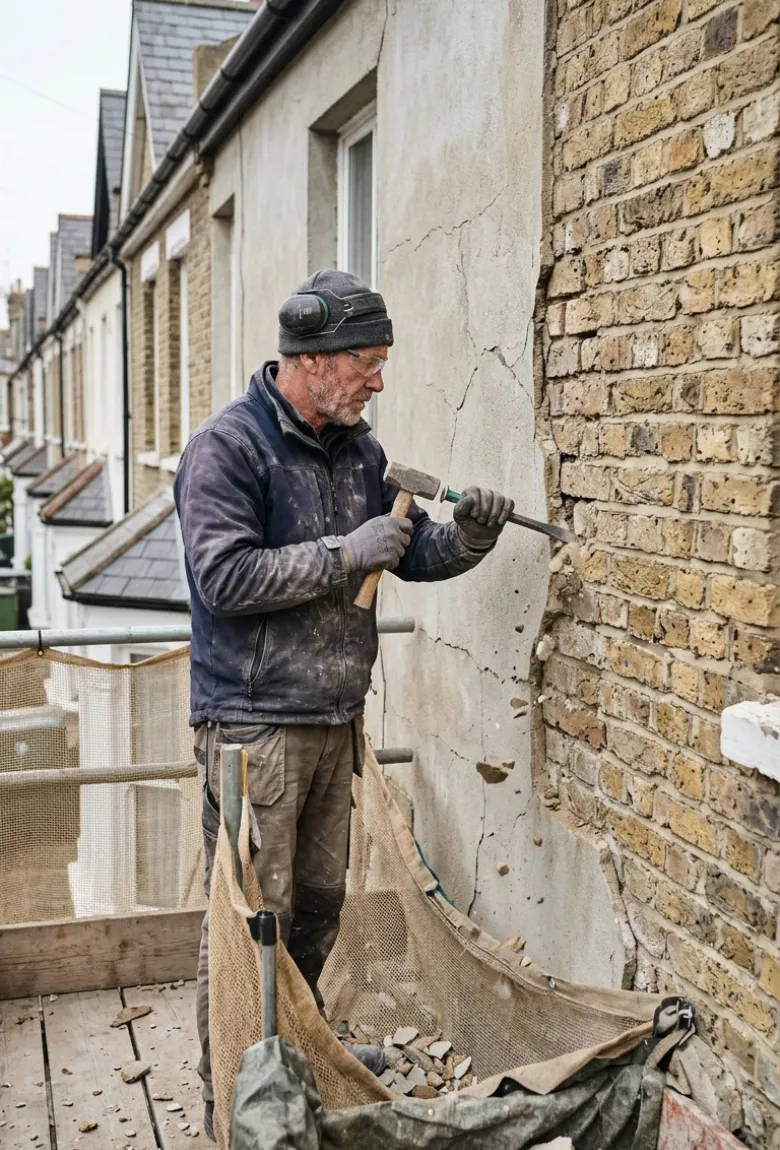
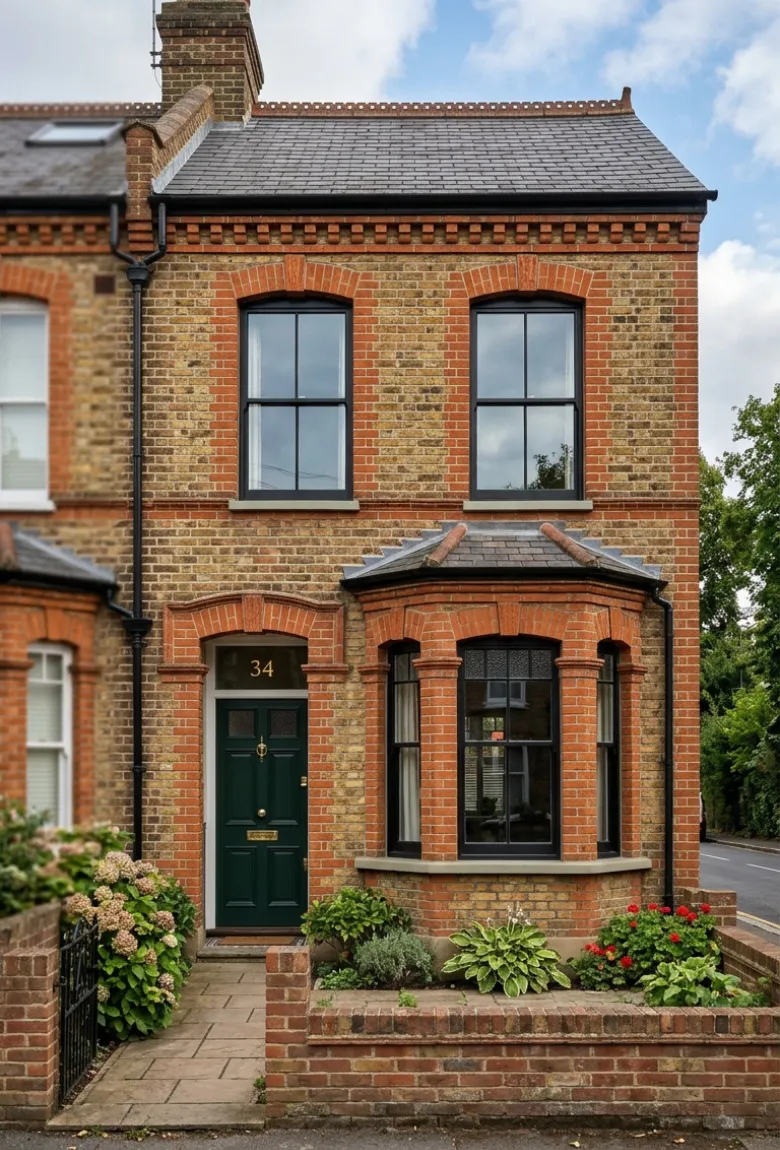
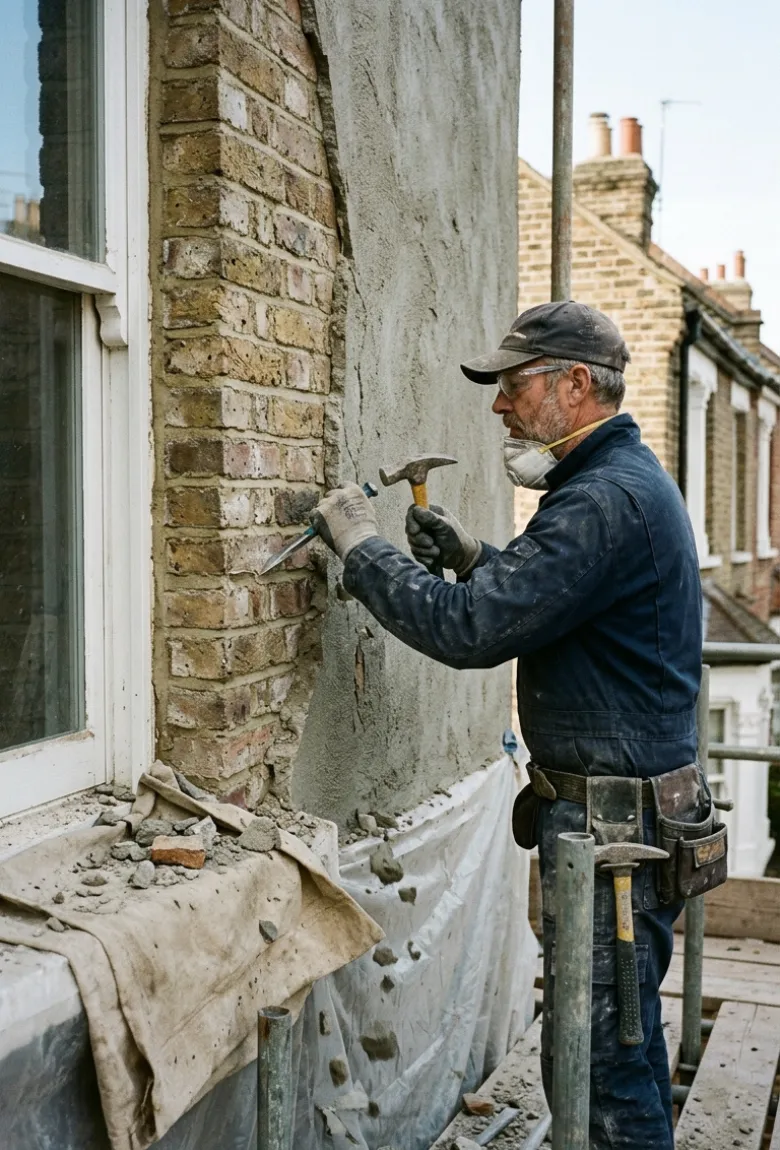
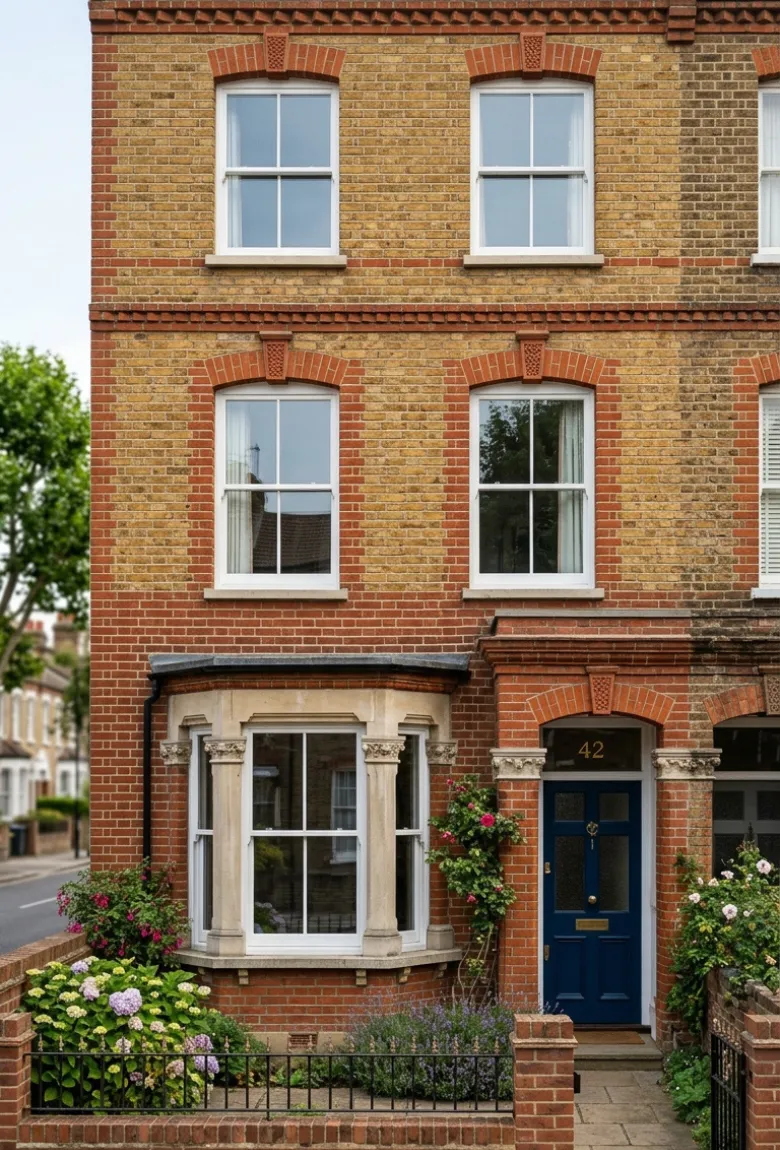
Take a look at recent jobs where we have taken render off, cleaned the brick and finished the wall with repairs and repointing.
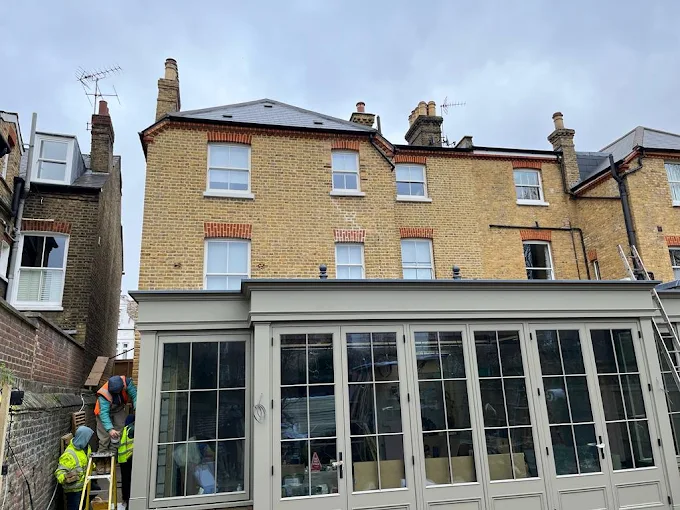
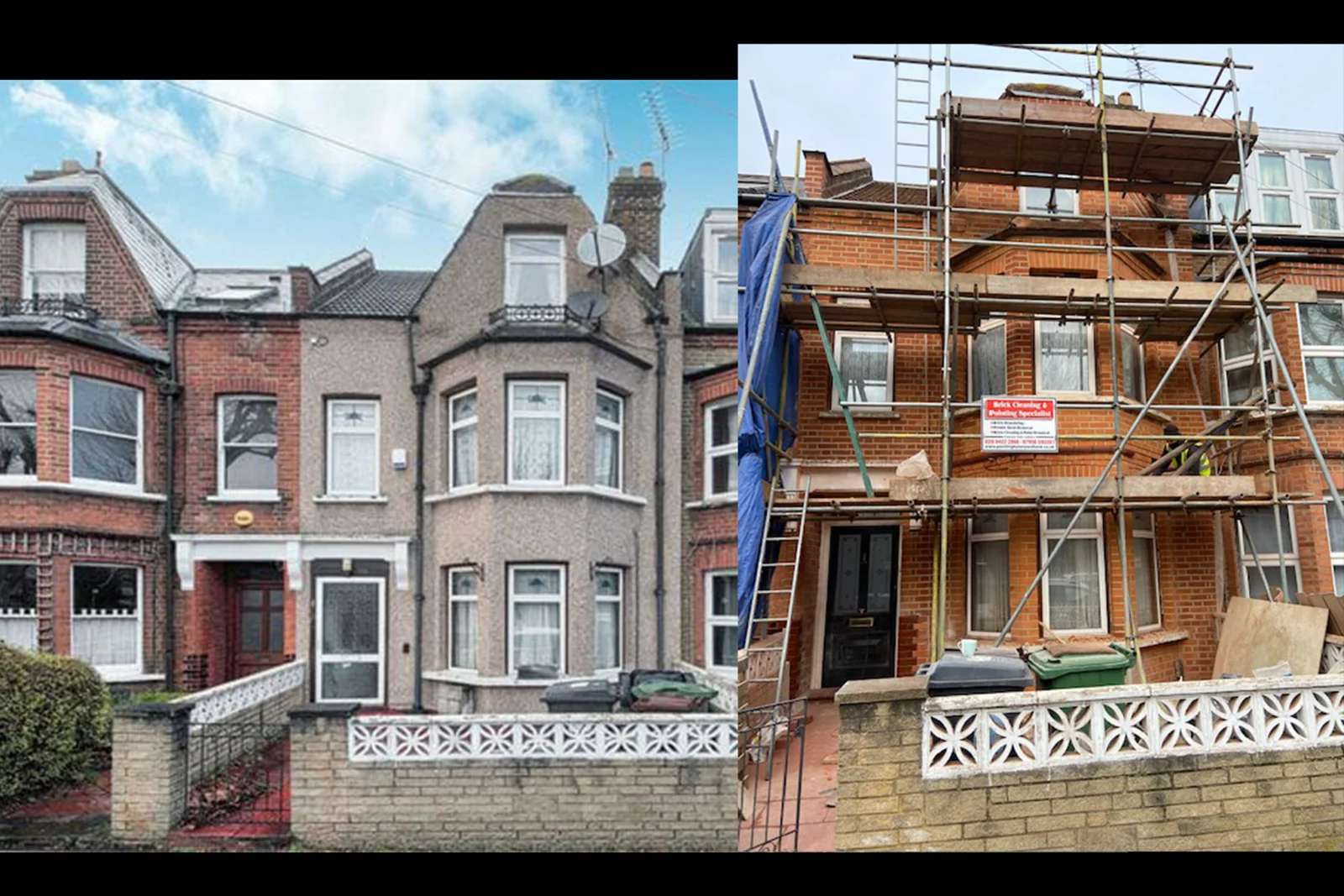
Masonry is all we work on, so the method always suits the wall rather than the other way round.
We check the render, the brick and the access first, and tell you about likely repairs up front.
Removal, cleaning, brick repairs and repointing are planned together, in the right order, under one quote.
Windows, doors, paving and planting are covered, and the site is cleared when we finish.
You see exactly what each part of the work costs before anything starts.
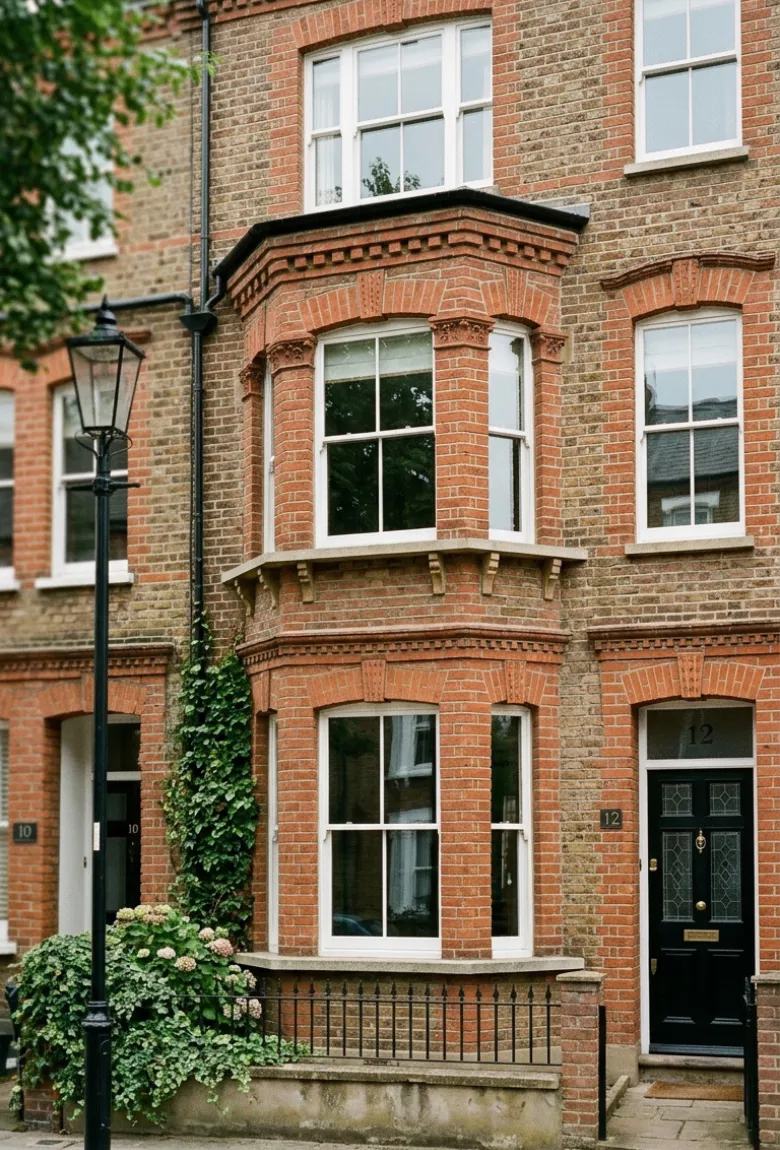
07429 912 873
Send us a few photos of the rendered wall and tell us what you would like it to look like. We will tell you what to expect underneath and send a clear quote for the whole job.
07429 912 873
Most cement and sand renders can come off brickwork. The result depends on how firmly the render is bonded and the condition of the brick behind it, which is why we look at the wall before we quote.
Not quite, and it shouldn't. Exposed brick shows its age and may carry marks from the render. Cleaning, matched repairs and repointing bring it back to a sound, even finish that suits the building.
Often, yes. Joints behind render are usually weathered or damaged, and repointing keeps the wall weathertight. If it is needed, we include it in your quote.
It creates dust and debris, so we cover windows, doors, paving and planting before starting and clear the site when we finish.
If your property is listed or in a conservation area, check with your local council first, because removing render changes the look of the building.