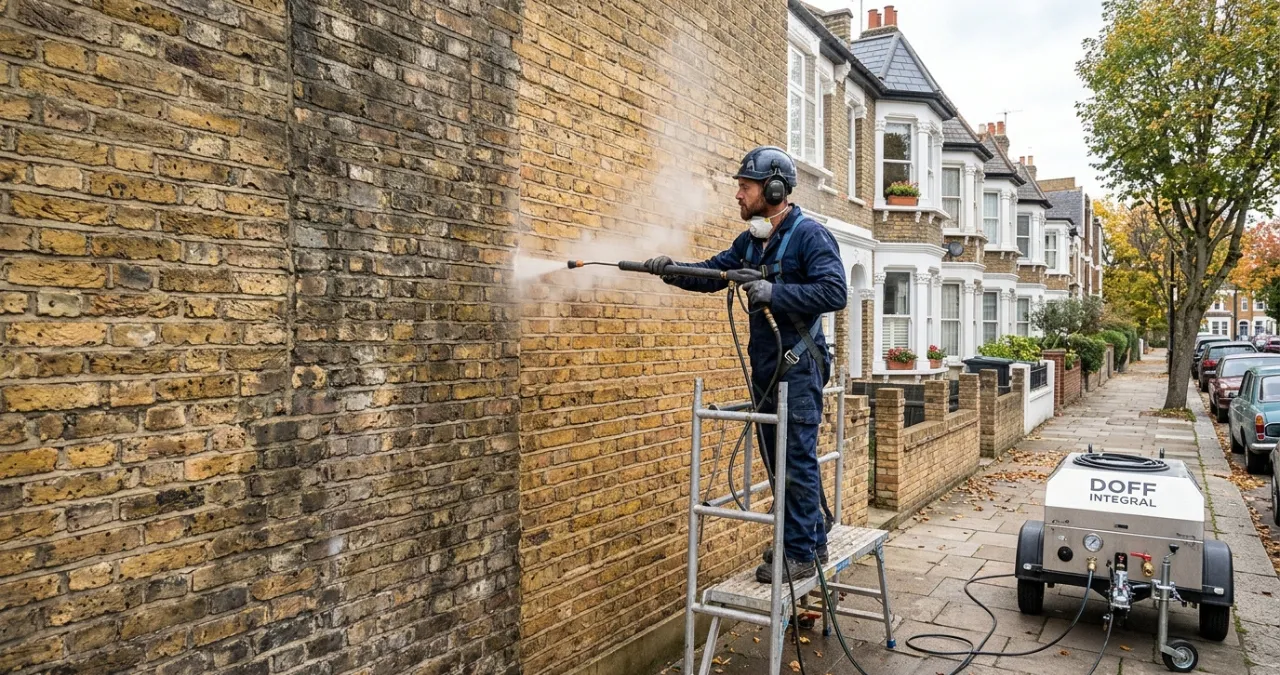
Many homeowners in Streatham, Clapham, Brixton and Dulwich want their brickwork cleaned without harsh acids, heavy blasting or a cloud of chemicals drifting over the garden. That is a sensible instinct, especially for Victorian and Edwardian houses built from soft London stock brick and lime mortar. The words “eco-friendly” and “chemical-free” are used loosely, though. This guide explains what gentler cleaning methods really involve, what they handle well, where they fall short, and how to choose the right approach for your home.
What Eco-Friendly Masonry Cleaning Means
Eco-friendly masonry cleaning means using the mildest method that will do the job. That means heat, water, hand tools or mild biodegradable cleaners rather than strong acids, caustic strippers or abrasive blasting. The aim is to protect both the building and its surroundings.
It rarely means using no cleaning products at all. Some stains can only be shifted with a cleaner made for them. A responsible contractor uses the least aggressive product that works, in the smallest amount, and controls the run-off.
Why Harsh Methods Can Damage Brickwork
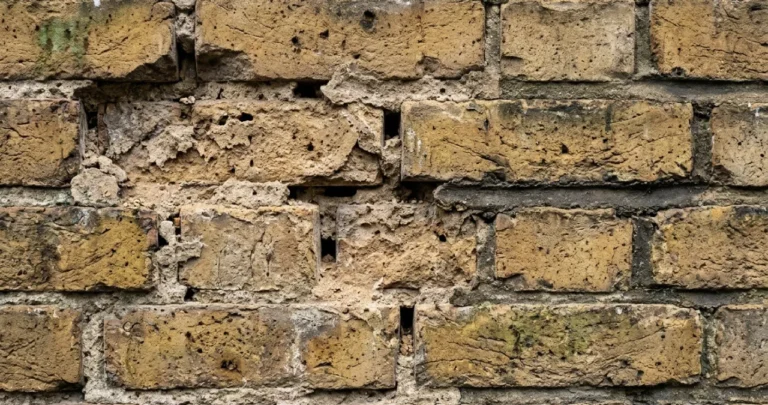
Period brick has a hard, fired outer face that protects the softer clay behind it. Aggressive cleaning can strip that face away.
- Strong acids can etch the brick, attack lime mortar and leave bleaching or streaks.
- Sandblasting and grit blasting can wear away the brick face and round off the edges of the joints.
- High-pressure jet washing can erode soft brick, wash out mortar and force water deep into the wall.
Once the face is gone, the brick takes in water more easily and weathers faster, and the damage can’t be undone. That is why gentle methods matter most on older South London houses.
Gentler Cleaning Methods Explained
Superheated steam
Steam systems such as DOFF use very hot water at low pressure. The heat loosens dirt and kills algae, moss and lichen without scrubbing or blasting. Steam is one of the most effective low-chemical methods for organic growth. Our guide to DOFF steam cleaning explains it in more detail.
Low-pressure hot water
Warm or hot water at low pressure lifts light grime and surface dirt, and it rinses away cleaning solutions. It avoids the erosion caused by high-pressure jet washing.
Hand brushing and manual cleaning
Soft brushes and hand tools are used around fragile areas such as cornices, sills, carved details and pointing that is already weak.
Low-pressure abrasive vortex cleaning
Systems such as TORC use a gentle swirl of air, water and fine granules at low pressure. They contain no chemicals, but they are still abrasive, so they must be set carefully for soft brick.
Mild, biodegradable cleaning solutions
Where water and heat alone won’t do the job, a mild cleaner suited to the brick and the stain is applied and then rinsed off. Used properly, this is still a gentle approach.
What Gentle Cleaning Handles Well
- Green algae, moss and lichen
- Light to moderate traffic grime and pollution staining
- General dirt build-up and weather staining
- Bird droppings
- Surface mould on shaded walls
Where Gentle Methods Fall Short
Some problems need a specific treatment, and promising otherwise would be misleading.
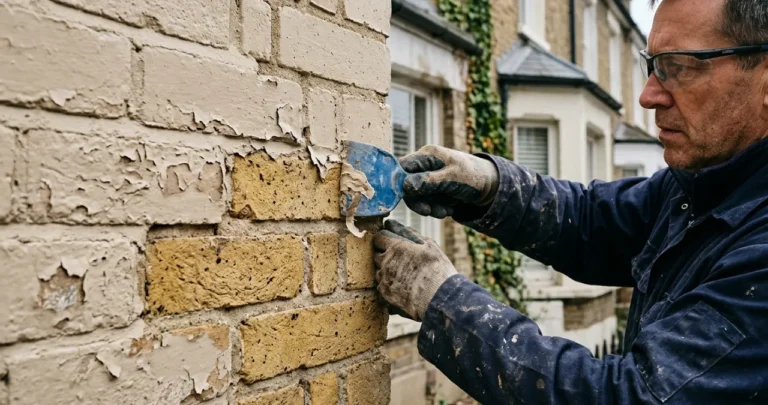
- Paint and graffiti need a remover made for the coating. See paint removal and graffiti removal.
- Cement and mortar smears from past building work usually need a targeted cleaner.
- Heavy black carbon staining on busy roads can take more than steam alone.
- Rust and iron staining need a cleaner made for that stain.
- Efflorescence (white salts) can be brushed off, but it keeps returning until the source of the moisture is fixed.
How to Choose the Right Method for Your Home
The right method depends on the brick, the mortar and the stain. A few questions worth asking any contractor:
- What exactly is the staining, and which method suits it?
- Will you try it on a small area first?
- What pressure and products will you use on soft or old brick?
- How will you protect windows, plants and neighbouring property, and collect the run-off?
- What will you do if cleaning reveals crumbling joints or damaged bricks?
How We Clean Brick in South London
At Brick Cleaning South London, we start with the gentlest method that will work. We apply a specialist cleaning solution suited to the brick and the stain, then rinse it off with warm water. We never sandblast or jet wash at high pressure. It is a gentle approach that brings back the brick’s natural colour while keeping its face intact. If cleaning shows up problems with the joints or bricks, we tell you and quote for repointing or repairs.
Find out more about our brick cleaning service, or compare every option in our guide to brick cleaning methods.