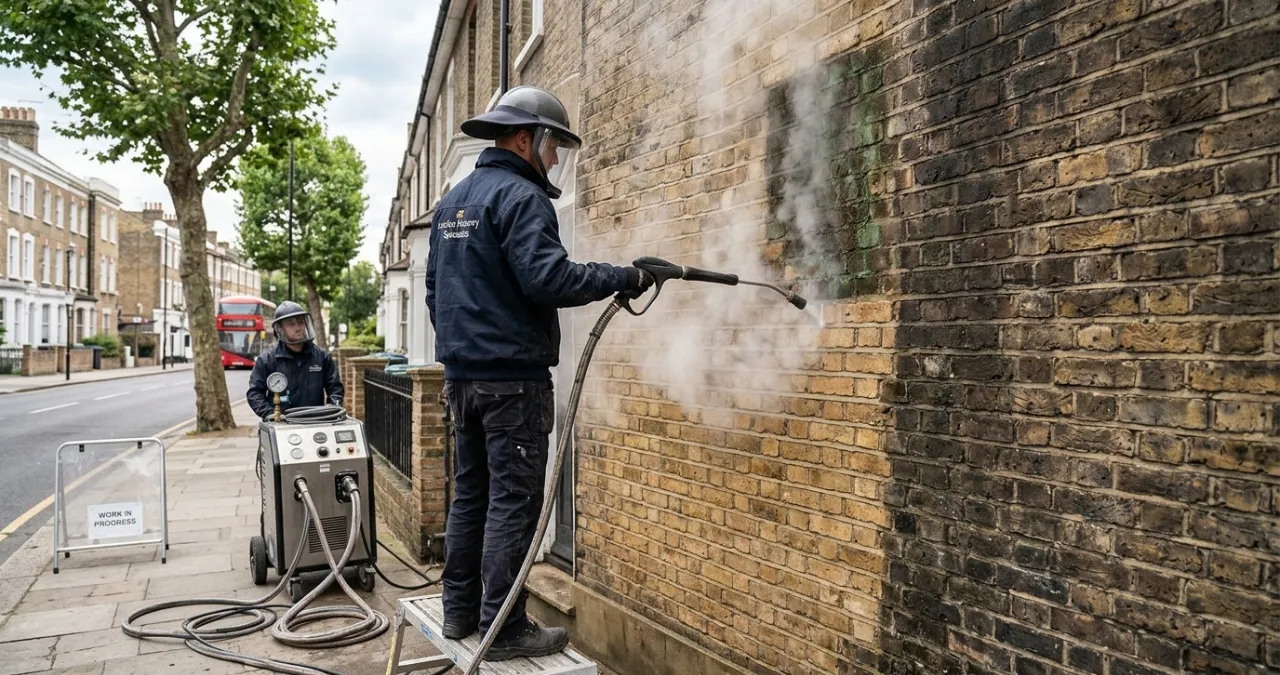
Soot, algae and moss can make a fine Victorian front in Clapham or Brixton look tired and grey. Many owners want it clean again, but they worry about damage. Superheated steam is one of the gentlest ways to do it. DOFF is the best-known steam system for brick and stone. This guide explains how it works and what it removes. It also covers where it falls short and how to tell if it suits your home.
What Is DOFF Steam Cleaning?
DOFF is a steam cleaning system made by Stonehealth, a UK masonry cleaning company. It heats water to a very high temperature and delivers it at low pressure through a fine nozzle. The maker says the steam can reach around 150°C at the nozzle.
The heat does the work, not the force. Hot steam softens dirt, breaks down growth and lifts it away. Because the pressure is low, the brick face is not blasted. Less water also goes into the wall than with a jet wash.
How Steam Cleaning Works on Brick
The operator moves the nozzle slowly across the wall, a small area at a time. The steam loosens the dirt, and the operator rinses or brushes it away. The temperature and flow are set to suit the brick and the stain.
Most walls need no cleaning products at all. On tougher stains, the operator may apply a mild cleaner first and then rinse it off with steam. A short trial on a hidden patch shows the result before anyone cleans the whole wall.
What Steam Cleaning Removes Well
Steam is at its best on organic growth and general dirt. It works well on:
- Green algae, moss and lichen
- Black mould on shaded or north-facing walls
- Light to moderate traffic grime and pollution
- Bird droppings
- Chewing gum on steps and paths
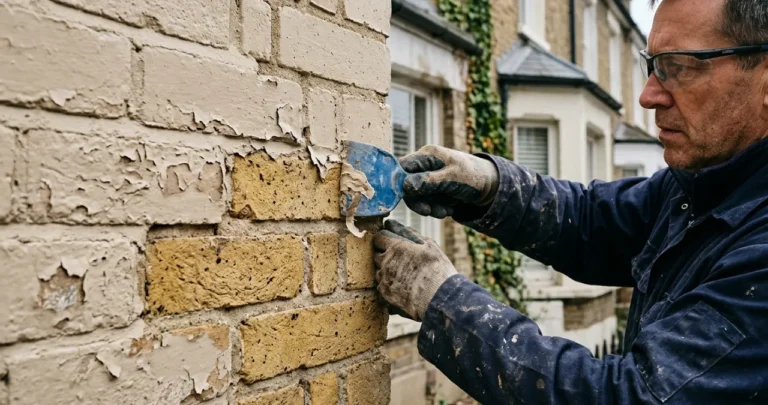
- Softened paint, as a step before a full paint strip
Heat kills algae and moss rather than just washing them off. That means growth often takes longer to come back than after a cold-water clean.
Where Steam Cleaning Falls Short
Steam is not the answer to every stain. It is honest to know its limits before you book.
- Thick or old paint needs a paint remover first. Steam can help soften it, but it rarely strips it on its own. See paint removal.
- Heavy black carbon on busy roads, such as the South Circular, may need a mild cleaner or a low-pressure abrasive method as well.
- Cement and mortar smears usually need a targeted cleaner.
- Rust and iron stains need a product made for them.
- Efflorescence (white salts) cleans off, but it comes back until you fix the damp that causes it.
Steam Cleaning vs Jet Washing
Both use water, but they work in very different ways.
| Steam (such as DOFF) | High-pressure jet washing | |
|---|---|---|
| Pressure | Low | High |
| Water temperature | Very hot | Usually cold |
| Water left in the wall | Less | More |
| Risk to soft brick and mortar | Low, when set up well | High |
| Effect on algae and moss | Kills it with heat | Washes off the surface |
| Suits Victorian and Edwardian brick | Usually | Rarely |
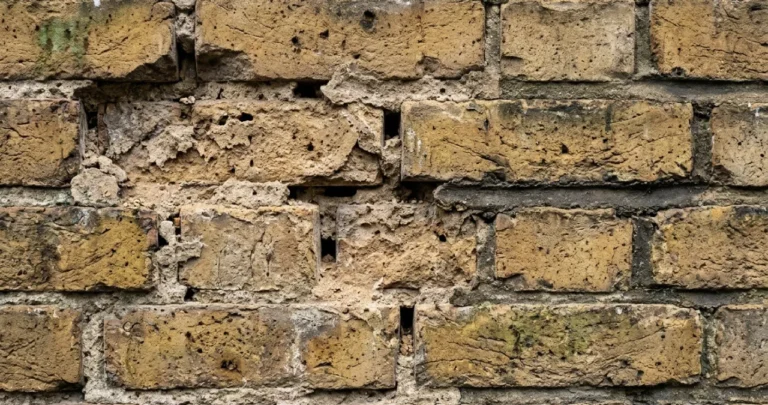
Jet washing at high pressure can strip the hard face off soft London stock brick and wash out old lime mortar. Once that happens, the damage cannot be undone. That is the main reason steam is often chosen for older South London houses.
Is Steam Cleaning Safe for Period and Listed Buildings?
Low-pressure steam is one of the gentler options for old brick. That is why many period and historic buildings are cleaned this way. It is still not risk-free. Too much heat or time in one spot can harm a fragile surface. That is why a trial patch matters.
If your home is listed, any cleaning of the outside may need listed building consent. Some conservation areas, such as parts of Dulwich and Clapham, have extra controls too. Check with your local council before work starts. No cleaning method is “approved” in general. The council looks at each case on its own merits.
What Affects the Cost of Steam Cleaning
Every job gets its own price. The main factors are:
- Wall area. A garden wall, a terraced front or a whole house.
- Type of staining. Light algae is quicker than decades of soot.
- Detail. Bay windows, cornices and carved stone take more time.
- Access. Whether a tower or scaffolding is needed.
- Repairs. Any repointing or brick repairs found along the way.
Questions to Ask Before You Book
A good contractor will be happy to answer these:
- Will you test the method on a small patch first?
- What temperature and pressure will you use on my brick?
- Will you use any cleaning products, and if so, which?
- How will you protect windows, plants and my neighbours’ property?
- What will you do if cleaning shows up loose joints or damaged bricks?
Getting Your Brickwork Cleaned in South London
At Brick Cleaning South London, we always start with the gentlest method that will work. We never sandblast or jet wash at high pressure. We clean brick and stone across South London, from Streatham and Tooting to Camberwell, Peckham and Croydon. If cleaning shows up worn joints or damaged bricks, we tell you and quote for repointing or repairs.
Find out more about our brick cleaning service. For other gentle options, read our guide to eco-friendly masonry cleaning. To compare every method, see our guide to brick cleaning methods.