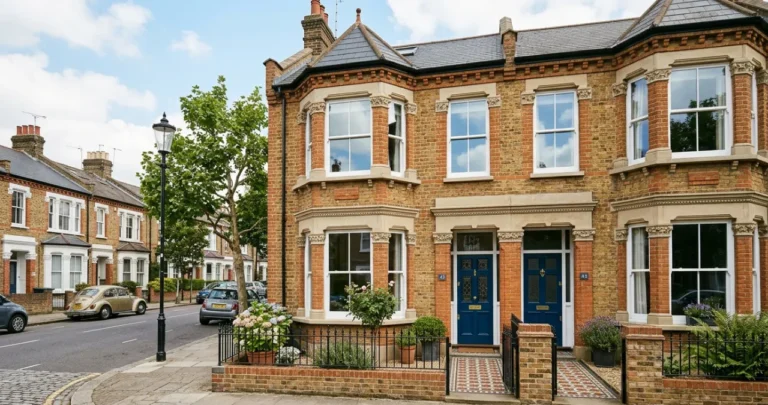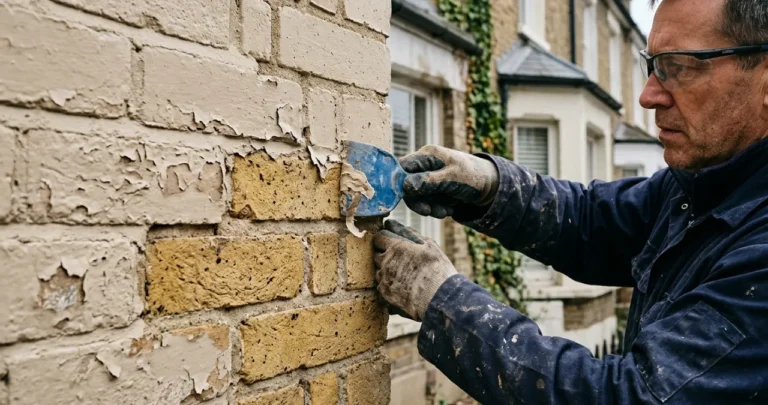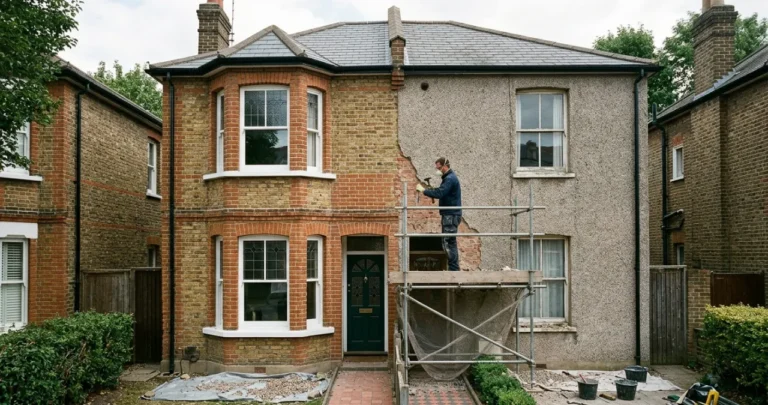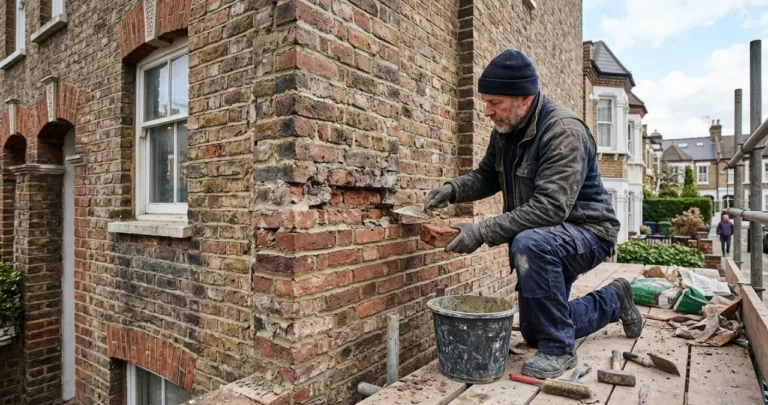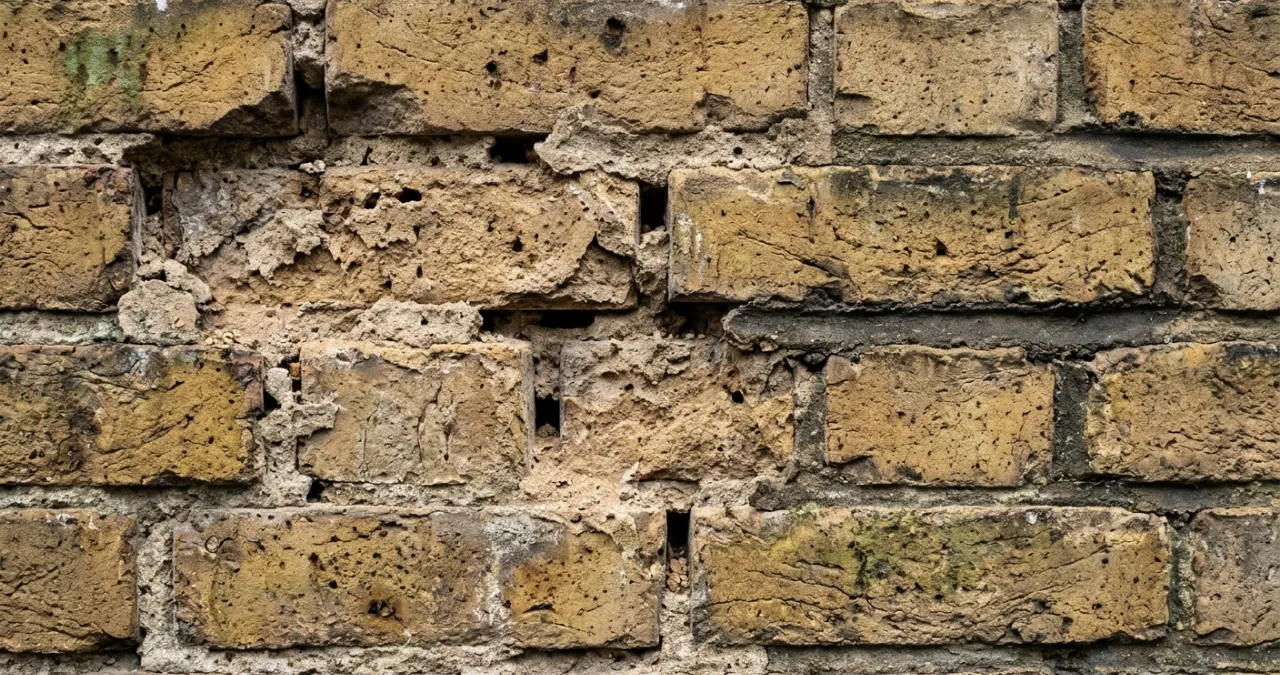
Mortar is the weak link in a brick wall, and it is meant to be. It is softer than the bricks, so it wears away first and can be renewed while the bricks last. On most South London houses, though, the original pointing is now over a hundred years old. This guide shows you how to tell when the joints need attention, how to spot bad repointing from the past, and whether you need a patch repair or the whole wall done.
What Repointing Is
Repointing means raking out worn mortar from the joints between bricks and filling them with new mortar. It renews only the outer part of the joint, usually to a depth of about twice the width of the joint. The bricks stay where they are.
Good pointing keeps rain out of the wall and holds the bricks firm. When it fails, water gets into the wall, and the damage speeds up.
A Simple Test You Can Do Yourself
Pick a few joints at eye level, on the side of the house that gets the most rain. Then try these checks.
- Look. Are the joints set back from the face of the brick, or level with it?
- Scratch. Run a key along the mortar. Sound lime mortar is firm. Failing mortar crumbles to sand.
- Feel. Press the edges of a few bricks. They should not move at all.
If the mortar is deeply recessed, sandy or soft, the joints need work. Check the chimney with binoculars, since it is usually the first part to fail.
Signs That the Joints Need Repointing
Recessed or missing mortar
The most common sign. Joints wear back from the face of the brick until you can see a ledge. Rain then sits on that ledge and soaks into the wall. Where mortar is missing completely, water runs straight in.
Crumbling, sandy mortar
Mortar that turns to powder when you touch it has lost its strength. It may still fill the joint, but it no longer keeps water out.
Cracks running through the joints
Hairline cracks in the mortar are common and often harmless. Cracks that run in a stepped line through the joints, or that keep getting wider, may point to movement. Find the cause before repointing over them.
Loose bricks
If a brick moves when you press it, the mortar around it has failed. This is most common on chimneys, parapets and garden walls, and it needs dealing with soon.
Damp patches inside
Damp on an inside wall, especially after driving rain, can come from failed joints outside. Check gutters and downpipes too, since leaks there are a common cause.
Plants and moss in the joints
Weeds, moss and buddleia grow where mortar has broken down and holds water. Their roots then open the joints further.
White salts after rain
White, powdery patches show that water is moving through the wall and drying out at the surface. On their own, they don’t mean the wall needs repointing. Where they sit along worn joints, though, they often mark where water is getting in.
Signs of Bad Repointing From the Past
Many South London houses were repointed in the last century with the wrong mortar or the wrong finish. That work can do more harm than the original wear. Look for these signs.
- Hard, grey cement mortar. It is often darker and harder than the old lime mortar. You may see the brick edges crumbling around it.
- Raised or ribbon joints. The mortar sticks out beyond the brick face, so rain runs along it and soaks in.
- Smeared joints. The mortar is spread over the brick faces, which makes the wall look messy and traps water.
- Patchy colour. Different repairs in different colours make the wall look uneven.
- Shallow pointing. A thin skin of mortar over old, loose material, which soon falls out.
Fixing bad repointing means carefully removing the hard mortar without damaging the bricks, then repointing with a suitable mortar.
Patch Repointing or the Whole Wall?
You don’t always need to repoint a whole house.
- Patch repointing suits walls where most of the pointing is sound and only some areas have failed, such as a chimney, a bay or the base of a wall. The new mortar should match the old in colour and finish, so the repair blends in.
- Full repointing makes sense when most joints are worn, when old cement repairs cover large areas, or when the wall has just been stripped of paint or render.
A full repoint also gives an even look across the whole wall, which can matter on a front elevation.
Why the Right Mortar Matters
Old London stock brick is soft, and it was laid in lime mortar. Lime is softer than the brick and lets the wall breathe. That way, water dries out through the joints, and the joints take the wear instead of the bricks.
Cement mortar is harder than old brick and less breathable. Water then dries out through the brick instead, and frost breaks up the brick face around the joints. For most period houses, a lime mortar is the right choice for repointing.
Is Repointing a DIY Job?
Small patches on a garden wall can be a reasonable DIY job if you use the right mortar and take your time. Most house walls are better left to a professional.
- Raking out without chipping the brick edges takes skill and the right tools.
- Lime mortar needs care while it sets, including protection from sun, rain and frost.
- Chimneys and upper walls need safe access, usually a tower or scaffold.
- A poor finish is hard to undo and shows across the whole wall.
How We Repoint Brickwork in South London
At Brick Cleaning South London, we rake out worn and failed joints and repoint them with mortar matched to the original brickwork. We also clean brickwork first where it needs it, so the new joints sit against clean brick. If repointing shows up damaged bricks, we tell you and quote for repairs.
Find out more about our pointing and repointing service. For the full process on older houses, see our guide to restoring old brickwork.