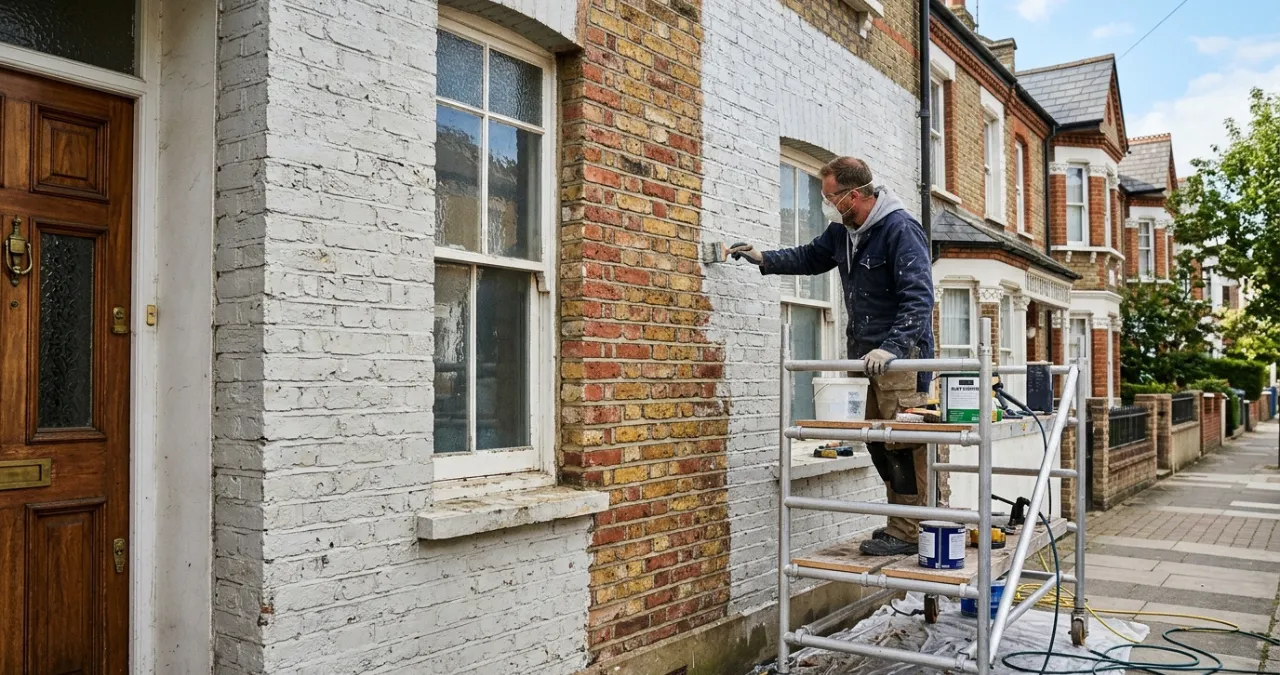
Many commercial and mixed-use buildings across South London are brick underneath decades of paint, sealant and patch repairs. Taking those coatings off can transform a shopfront, office or block of flats. On a larger building, though, it needs more planning than a single house front. This guide explains why coatings fail, how removal methods are chosen, and what to plan for before work starts, so you can brief a contractor with confidence.
Buildings This Guide Applies To
- Shops, restaurants and cafés on high streets in Brixton, Clapham, Peckham and Croydon
- Offices and converted Victorian commercial buildings
- Purpose-built blocks of flats and mixed-use buildings
- Warehouses, workshops and light industrial units
- Schools, churches and community buildings
Why Coatings Fail on Commercial Brick Buildings
Most paint on brick was applied to tidy a building up, cover repairs or match a brand. Over time, the problems build up:
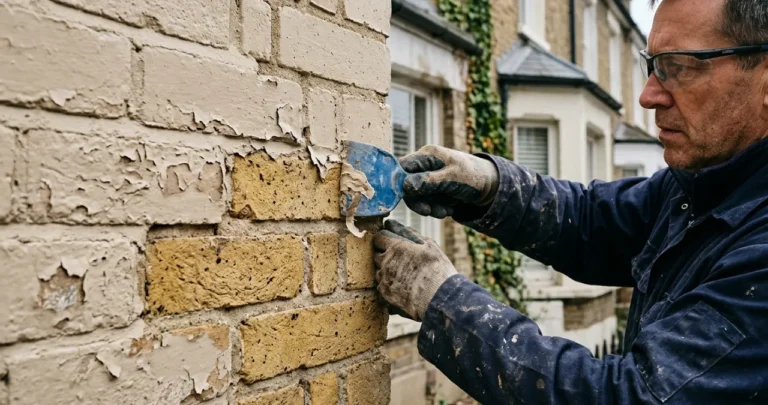
- Flaking and blistering. Rain, frost and pollution break the paint down, and patchy facades look neglected to customers and tenants.
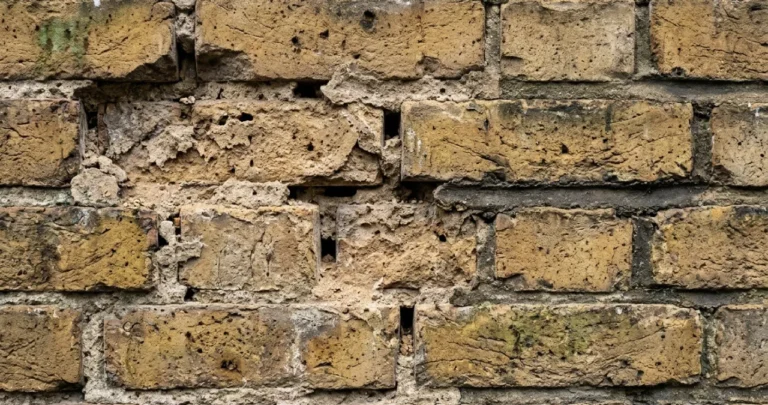
- Trapped moisture. Many paints and sealants slow down how quickly brick dries. Water gets in behind cracks and can’t escape, which leads to damp and damaged brick.
- Layers from past refurbishments. Each new tenant or owner adds another colour, and new paint bonds poorly to old, failing layers.
- Mismatched colours and patch repairs. Years of touch-ups leave a facade that no longer reads as one building.
- Failed protective coatings. Old water repellents and anti-graffiti layers can yellow, peel or trap dirt.
Common Coatings Found on South London Buildings
Knowing what you are dealing with is the first step, because each coating behaves differently.
- Masonry paint. The most common coating on brick. It is usually water-based, sometimes in many layers.
- Gloss and oil-based paint. This is often found on plinths, pilasters, sills and older shopfronts.
- Textured and elastomeric coatings. Thick, rubbery finishes that are heavy to remove.
- Sealants and water repellents. These are often invisible until they start to fail or discolour.
- Bitumen and tar. You’ll find these at the base of walls, around old signage and on boundary walls.
- Anti-graffiti coatings. Clear layers applied to make graffiti easier to clean, which may need removing before other work.
- Limewash. A traditional, breathable finish that is removed in a different way from modern paint.
How Removal Methods Are Chosen
No single method suits every building. The choice depends on the type and thickness of the coating, the age and hardness of the brick, how porous it is, and what is around the work area. Larger projects often combine more than one method, and a small trial area is the most reliable way to confirm the approach before committing to the whole facade.
Chemical paint removers
Removers made for masonry soften or dissolve the paint so it can be lifted off and rinsed away. They suit most paints, including several layers, and avoid scraping or blasting the brick. Thick coatings can need several applications.
Superheated steam
Systems such as DOFF use very hot, low-pressure steam to soften paint and remove organic growth. Steam works well on softened or thin coatings and alongside chemical removers.
Low-pressure abrasive cleaning
Systems such as TORC use a gentle swirl of air, water and fine granules at low pressure. They are used for carbon staining, limewash and some stubborn coatings, but they must be set carefully to avoid wearing the brick face.
Hand finishing
Around windows, signage, joints and decorative brickwork, careful hand cleaning gives a clean, even edge.
At Brick Cleaning South London, we strip paint using a specialist paint remover matched to the coating. We then clean the brick to remove any residue. See our paint removal service.
Planning Work on an Occupied Building
Commercial buildings are rarely empty, so planning matters as much as method.
- Access. Decide early whether towers, scaffolding or a powered access platform are needed. Scaffolding on a public pavement usually needs a licence from the local council.
- Trading hours and residents. Work can be split into sections, so that entrances, shopfronts and windows are only affected for short periods.
- Protecting people and surfaces. Pavements, entrances, windows, signage and planting need protecting. Areas under the work should be kept clear.
- Run-off and waste. Residue from removers and old paint should be collected and disposed of properly, not washed into drains.
- Weather. Removers and rinsing work best outside frost and heavy rain, so allow some flexibility in the programme.
Checks Worth Making Before Work Starts
- Lead in older paint. Paint applied before the 1960s can contain lead. On older buildings, have the coatings tested so the right precautions can be planned.
- Listed buildings and conservation areas. Changing the appearance of a listed building usually needs listed building consent. Some conservation areas also have extra controls. Check with the local council first.
- Leases and freeholders. On multi-unit buildings, check who is responsible for the facade and whether approval is needed.
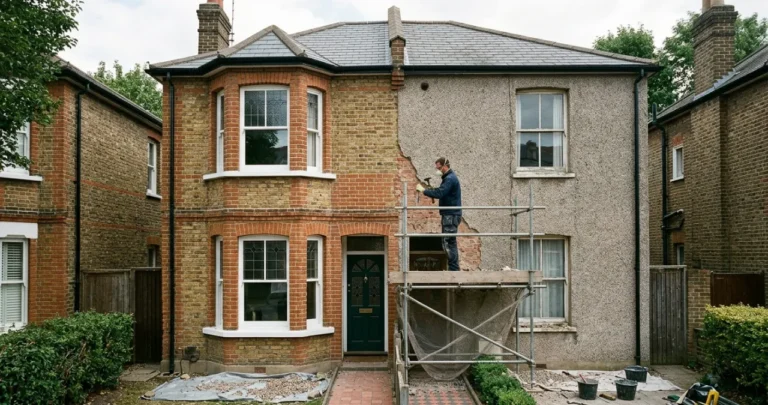
- The condition of the brick. Paint often hides cracked bricks and failing mortar, so allow for repairs once it comes off.
What Happens After the Paint Comes Off
With the coating gone, the true condition of the brickwork is visible. Most facades benefit from one or more of these:
- Cleaning to even out the colour across the whole building. Brick cleaning
- Repointing of open or crumbling joints. Pointing and repointing
- Brick repairs where bricks are cracked or spalled. Brickwork repair and restoration
If you still want a coloured finish, ask about breathable options rather than reapplying the same type of paint that failed.